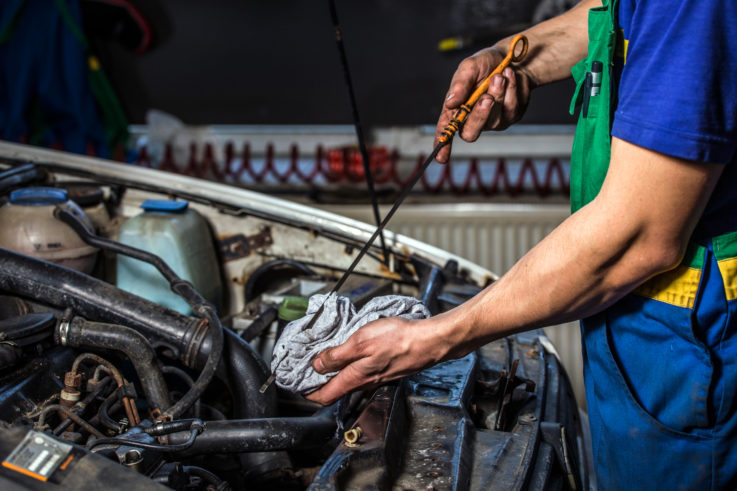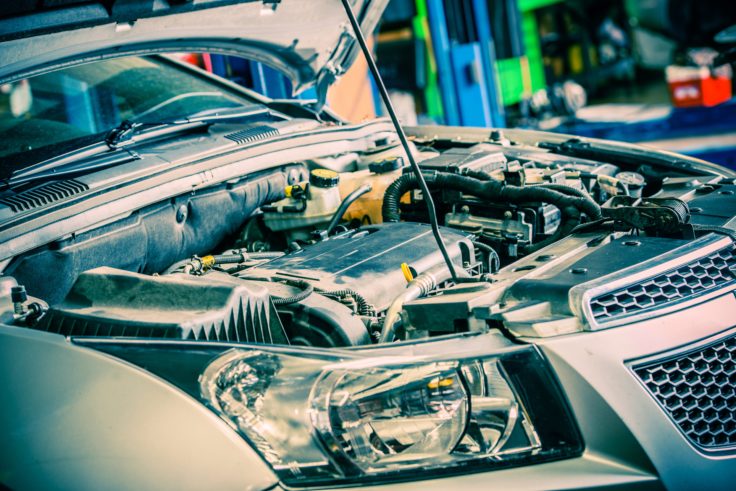
How to choose a collision repair shop
Most people have never been involved in an accident in their lifetime to know exactly what they should do at that particular time.
The insurance company is willing to give advice, but that advice is usually based on the insurer’s best interests and agendas that are not usually in the best interest of the vehicle owner. The insurance company will seek the following:
Fast Repairs
Although a fast repair is desirable, high quality collision repair is not a process that should be rushed, you and your families safety back on the road depends on the quality of repair. The insurance company wants a very quick turn around time in order to save money on rental car costs and loss of use. Additionally, a “fast” repair will leave numerous procedures and details unfulfilled. All of this is to simply accomplish one goal at the time of paying out a loss, minimizing repair cost.
When shopping for a collision repair, speed of repairs should not be a selling point, but a warning!
Cheap Repairs
All insurers are seeking a cheap repair, as every dollar spent on repairs is one less dollar of profit. There is a saying that “good repairs are not cheap, and cheap repairs are not good.” This is particularly true in the highly skilled and complex world of collision repairs. Cutting corners on collision repairs will result in flaws, defects, costly re-repairs, diminished value, and potential safety hazards.
Most collision repair shops are seeking their own course of action to achieve the most profits and from the least hassles. Many times that means not representing the customer and fighting the insurance company for a full repair, or not informing the vehicle owner when an insurer is unwilling to address all items and procedures caused by the loss.
Using a shop that the insurance company recommends or refers you too, is exactly what they want you to do. It’s simply a way of them steering you in the direction that benefits them the mostly. Many insurers will use unethical tactics to lie and defame the good quality, honest and ethical shops that offer a quality (more expensive) repair. Choosing a competent collision repair center will save time, money, aggravation and potentially lives. Call Chapa Auto Craft, we would love the opportunity to assist you with your collision repair. We got your back!!!
Tips For Selecting A Collision Repair Shop
- Use a shop that will inform and empower you with knowledge of your rights to a full and proper repair.
- Select a shop that is recommended by someone other than the insurance company such as friends and family
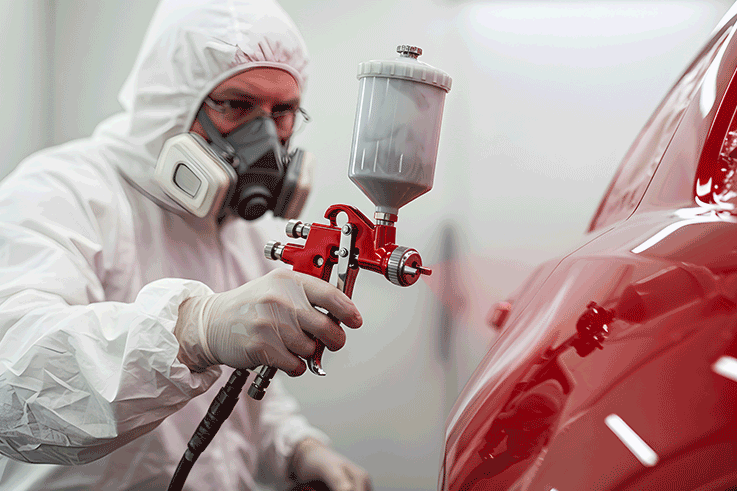
Body Shop vs. Dealership: Which Is Better for Collision Repairs?
Body Shop vs. Dealership: Which Is Better for Collision Repairs?
After an accident, you might be tempted to take your car back to the dealership where you bought it. It seems logical — they know the car, they have the parts, they are official. But is the dealership actually the best place for collision repair? Here is the honest comparison.
What Dealership Service Centers Are Good At
Dealerships excel at warranty work, recall repairs, and manufacturer-specific software updates. Their technicians are trained specifically on that brand. For mechanical issues covered under warranty, the dealership is often your best (or only) option.
Where Dealerships Often Fall Short on Collision Repair
Many dealership service centers outsource their body work to a third-party body shop or have a body shop on site that operates somewhat independently. The collision side of a dealership is often not the core business — it is an add-on.
More importantly, dealerships are typically preferred shops for manufacturer insurance partners. The same cost-containment dynamics that apply to insurance preferred shops apply to dealership body departments. Volume and throughput often take priority.
What an Independent Body Shop Does Better
A reputable independent body shop, like Chapa Autocraft, has one focus: collision repair and auto body work done right. Every technician in the shop is there for body and paint. The shop is set up specifically for it. The owner’s reputation is on every car that leaves the bay.
Independent shops also have more flexibility on parts decisions and are not beholden to preferred vendor agreements that might steer them toward lower-cost components. When you choose your shop independently, the shop works for you — not for the insurer’s margins.
ADAS and Modern Vehicle Technology
Modern vehicles have advanced driver assistance systems (ADAS) — lane keep assist, adaptive cruise, collision warning, blind spot monitoring — that use cameras and radar sensors mounted throughout the vehicle. After a collision, these sensors may need recalibration even if they look physically undamaged.
Both good dealerships and good independent shops should be equipped for ADAS recalibration. Chapa Autocraft has the equipment and training to recalibrate ADAS systems after collision repair.
The Verdict
For warranty work and manufacturer recalls: dealership. For collision repair: an independent body shop with certified technicians, a good local reputation, and a lifetime warranty on their work — like Chapa Autocraft.
Visit Chapa Autocraft in Kyle, TX
We are at 700 Veterans Dr, Kyle, TX 78640. Call 512-504-9577 for a free collision estimate. We serve Kyle, Buda, San Marcos, and all of Hays County.
Also see: Collision repair | Body shop in Kyle | ADAS calibration
“The dealership quoted me almost double what Chapa did for the exact same collision repair. Same OEM parts, same paint quality, same lifetime warranty — I don’t know why anyone would go to the dealership first.”
— James E., Google Review
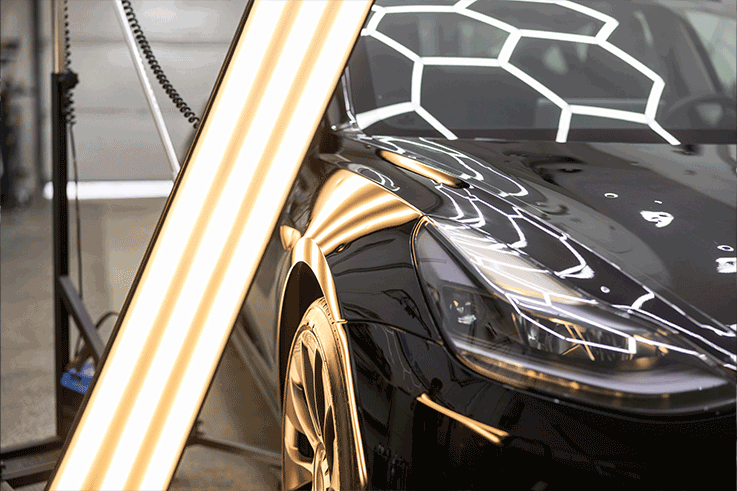
Hail Damage in Kyle, TX? Here’s What to Do
Hail Damage in Kyle, TX? Here’s What to Do
Central Texas gets hit with hail multiple times a year. One afternoon storm can put dozens of dents in your hood, roof, and trunk lid. If you came out to your car after a hail storm in Kyle, Buda, or San Marcos and found damage, here is exactly what to do.
Step 1: Document the Damage Immediately
Before you drive anywhere, photograph every panel of your vehicle in good light. Take close-up shots of individual dents and wide shots showing the full extent of damage. This documentation matters for your insurance claim — do not skip it.
Step 2: Contact Your Insurance Company
Hail damage is typically covered under the comprehensive portion of your auto insurance policy, not collision. Comprehensive coverage does not affect your fault rating and typically has a separate (often lower) deductible. Report the claim promptly — most policies require timely notification.
Step 3: Choose Your Repair Method
For hail damage, you generally have two options:
Paintless Dent Repair (PDR)
PDR uses specialized tools to massage dents out from behind the panel, without any painting. It is the fastest, most cost-effective option for hail damage — and when done by a skilled technician, it is invisible. PDR works well when the dents are shallow and the paint is not cracked or broken.
Traditional Body Repair and Paint
When hail dents are deep, numerous, or when the paint is cracked, PDR is not sufficient. Traditional repair involves filling, sanding, priming, and repainting the affected panels. The result is the same — factory-quality finish — but it takes longer and costs more.
At Chapa Autocraft, we assess your specific damage and recommend the right method. We do both PDR and traditional collision repair in-house.
Step 4: Beware of Storm Chasers
After major hail events, fly-by-night PDR shops set up in parking lots and chase the business. These operations are often unlicensed, do substandard work, and disappear before you can bring the car back if something is wrong.
Use a shop with a physical address and a long-standing reputation in the community. Chapa Autocraft has been at 700 Veterans Dr in Kyle since 2008. We are not going anywhere.
Schedule Your Hail Damage Repair in Kyle, TX
Chapa Autocraft handles hail damage insurance claims directly. We assess the damage, write the estimate, and work with your adjuster. You drop off your car and pick it up looking like the storm never happened.
Call 512-504-9577 or stop by 700 Veterans Dr, Kyle, TX 78640. We serve Kyle, Buda, San Marcos, Mountain City, and all of Hays County.
Also see: Paintless dent and hail repair | Collision repair | Service area
“After the last big hail storm my Jeep had dents everywhere. Chapa did paintless dent repair on most of it and the car looks brand new. Worked with my insurance on the claim so I barely lifted a finger.”
— Brittany A., Google Review

The Real Cost of Skipping Car Maintenance
The Real Cost of Skipping Car Maintenance
It is easy to push maintenance off. Life gets busy. The car seems fine. The service reminder is just a sticker from the last oil change, not anything urgent. But skipped maintenance has a compounding cost that most people only appreciate after a large repair bill lands in front of them.
Oil Changes: The Foundation of Everything
Engine oil lubricates dozens of moving metal components and carries combustion byproducts away from critical surfaces. Old, degraded oil loses its viscosity and its ability to do these jobs. The result over time is accelerated engine wear — thicker deposits on pistons and valves, harder starts, reduced fuel economy, and eventually engine damage that costs far more than any oil change ever would.
A basic oil change at a real mechanic shop in Kyle costs $50-90 depending on oil type. An engine rebuild or replacement starts at several thousand dollars. The math on preventive maintenance is not complicated.
Brakes: The Cost of Waiting
Brake pads wear gradually and give clear warning signs before they fail (see our post on brake warning signs). When pads wear completely, the metal backing contacts the rotor. Rotors get scored, and suddenly a $200 pad replacement becomes $500-800 for pads and rotors. Wait even longer, and caliper damage adds more.
Tires: Alignment and Rotation Matter
Tires are expensive. The way to get maximum life out of them is rotation every 5,000-7,500 miles and an alignment check annually or whenever you hit something significant. A car out of alignment chews through tires unevenly — often on the inside edge where you cannot see it until the tire fails. A $100 alignment extends the life of $700 worth of tires.
Coolant and Fluids
Coolant degrades over time and becomes acidic, which corrodes the aluminum components in your cooling system. A coolant flush every 2-3 years prevents hose degradation, water pump failure, and radiator leaks. Each of those repairs costs more than a coolant service.
Brake fluid absorbs moisture over time, which lowers its boiling point and can cause brake fade under hard use. Transmission fluid, power steering fluid, and differential fluid all have service intervals too — and all have expensive consequences when neglected.
The Simple Framework
Your owner’s manual has a maintenance schedule. It is not conservative — it is the manufacturer telling you what the minimum service is to keep your warranty valid and your vehicle reliable. Following it is the single best return on investment in vehicle ownership.
Get a Maintenance Check in Kyle, TX
If you are not sure where your car stands on maintenance, bring it to Chapa Autocraft for an inspection. We will go through what is due, what is coming up, and what is fine. No manufactured urgency, no upsells — just a straight assessment from certified mechanics.
We are at 700 Veterans Dr, Kyle, TX 78640. Call 512-504-9577 or stop by. Serving Kyle, Buda, San Marcos, and all of Hays County.
Also see: Auto repair services | Oil change service | Automotive repair in Kyle
“I knew I was behind on service but kept putting it off. Chapa gave me a prioritized list — what had to be fixed now, what could wait 3 months, what was optional. No pressure, just facts. Wish I’d come in a year earlier.”
— Kevin W., Google Review

Check Engine Light On in Kyle, TX? Here’s What It Actually Means
Check Engine Light On in Kyle, TX? Here’s What It Actually Means
That amber glow on your dashboard. It might be nothing. Or it might be something serious. The frustrating truth is that a check engine light alone does not tell you much — you need to read the diagnostic trouble code stored in your vehicle’s computer to know what’s actually happening.
What the Check Engine Light Really Tells You
Your car’s onboard diagnostic system (OBD-II) monitors dozens of sensors throughout the engine, transmission, emissions system, and more. When a sensor reading falls outside of expected parameters, it stores a trouble code and turns on the check engine light.
The light itself is a notification, not a diagnosis. It is saying “something triggered a code — go investigate.” Without reading the code, you are guessing.
Common Causes — From Minor to Serious
Here is a rough hierarchy of check engine light causes, from least to most urgent:
Minor — but fix it:
- Loose or missing gas cap (most common single cause — tighten or replace it)
- Oxygen sensor (affects fuel economy, not an immediate safety risk)
- Mass airflow sensor
- Spark plugs or ignition coils (if not severe)
Moderate — schedule service soon:
- Catalytic converter efficiency codes
- EVAP system leaks
- EGR valve issues
- Thermostat performance codes
Serious — address promptly:
- Misfire codes (especially multiple cylinders) — can damage catalytic converter if ignored
- Low oil pressure warnings combined with check engine
- Transmission range sensor or solenoid codes
Blinking vs. Steady Light
A steady check engine light means the system detected a fault but is not in an active, severe state. Schedule service — but you can usually drive it carefully for a short time.
A blinking or flashing check engine light means an active misfire that is severe enough to damage your catalytic converter. Do not ignore this. Reduce speed, avoid hard acceleration, and get it to a shop as soon as possible.
Get It Diagnosed in Kyle, TX
At Chapa Autocraft, we read your diagnostic codes and explain what they mean — in plain language. We will tell you what triggered the light, what the likely cause is, and what it costs to fix. No made-up urgency, no overselling.
Stop by at 700 Veterans Dr, Kyle, TX 78640 or call 512-504-9577. We serve Kyle, Buda, San Marcos, and all of Hays County.
Also see: Auto repair services | Automotive repair in Kyle | Service area
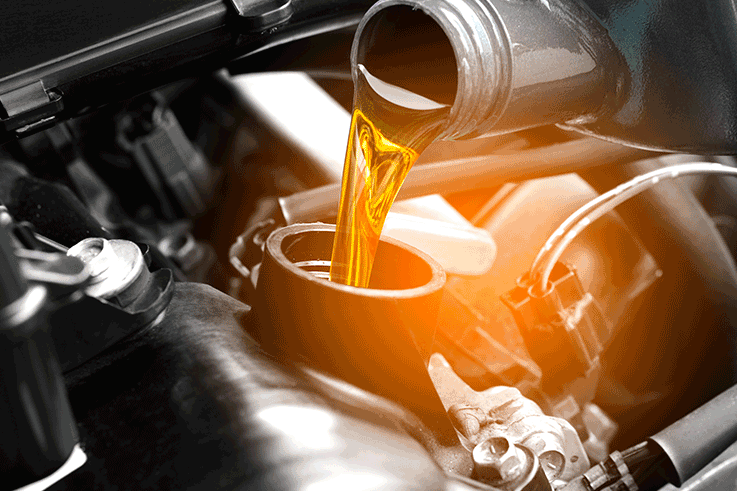
What Happens During an Oil Change at a Real Shop
What Happens During an Oil Change at a Real Shop
Most people hand over their keys and sit in a waiting room without a clear picture of what is actually happening to their car. Here is a step-by-step look at what an oil change looks like at Chapa Autocraft — so you know what you are getting.
Step 1: Your Car Goes on the Lift
The first difference between us and a quick lube: your car goes up on a full shop lift. This gives our technician a complete view of the underside of your vehicle — not a partial look through a floor pit. That matters for everything that comes next.
Step 2: We Look Before We Touch
Before draining a drop of oil, our technician does a quick visual inspection of what they can see from underneath. Brake lines. Exhaust. CV axle boots. Suspension components. Frame condition. Obvious fluid leaks. This takes two minutes and is the part that quick lubes skip entirely.
Step 3: Drain and Filter
We remove the drain plug and let the old oil drain completely. Then we remove the old oil filter. This is important — some shops reuse filters to save money. We always install a new filter with every oil change.
Step 4: The Right Oil Goes In
We look up your vehicle’s oil specification and use the correct viscosity and type. Conventional, synthetic blend, or full synthetic — whatever your manufacturer calls for. The fill quantity is checked against spec, not guesswork.
Step 5: Visual Inspection Continues
With fresh oil in and the car still on the lift, we check:
- Brake pad thickness (from underneath — no need to pull wheels for a basic check)
- Tire tread depth and uneven wear patterns
- Visible suspension wear
- Fluid levels — we top off washer fluid, check brake fluid and coolant condition
- Air filter and cabin filter inspection
Step 6: We Tell You What We Found
If we found anything during the inspection, we come and tell you in plain language. Not jargon, not alarm, just facts: “Your rear brake pads are at about 3mm — the manufacturer minimum is 2mm, so you’ve got some time but you should plan for a brake job soon.” You decide what to address now and what to schedule for later.
Step 7: Oil Life Monitor Reset
For vehicles with an oil life monitoring system, we reset it so the system accurately tracks the interval on the fresh oil.
Schedule Your Oil Change in Kyle, TX
Chapa Autocraft is at 700 Veterans Dr, Kyle, TX 78640. No appointment needed for oil changes — walk in or call ahead at 512-504-9577. We serve Kyle, Buda, San Marcos, and all of Hays County.
Also see: Oil change service | Full auto repair | Service area
“They actually walked me back into the shop and showed me my car on the lift. Pointed out the fluids they were checking, the filters, the tires. I’ve never had a shop do that. Now I won’t go anywhere else.”
— Amanda S., Google Review

Why Kyle Families Trust Chapa Autocraft for Collision Repair
Why Kyle Families Trust Chapa Autocraft for Collision Repair
There are several body shops in the Kyle area. So why do Kyle, Buda, and San Marcos families keep coming back to Chapa Autocraft — and sending their friends and family here? We asked ourselves the same question, and the answer comes down to a few things that are harder to replicate than any piece of equipment.
We Have Been Here Since 2008
Chapa Autocraft has been part of the Kyle community since 2008. That was before the population explosion that transformed this area. We have watched Kyle grow from a small town into one of the fastest-growing cities in Texas, and we have grown with it.
Being here that long means something. We have repaired cars for parents and their kids. We have customers who come to us for oil changes because we did their collision repair five years ago and they trusted how that went. Long-term local reputation is not something you can manufacture — it is earned over years of consistent work.
We Are Family Owned and Locally Accountable
This is not a franchise location of a national chain. The people making decisions about how your car gets repaired are the same people whose name is on the business. When you call with a concern, you talk to us — not a call center. When something is not right, we make it right.
National body shop chains and insurance preferred networks often operate under significant cost and time pressure. The priority is throughput. At Chapa, the priority is your car and your satisfaction — because our reputation in this community is how we stay in business.
We Are the Only Shop That Does Everything
Most shops in Kyle specialize in either collision work or mechanical repair. Chapa Autocraft does both. That matters after an accident, when your car may have cosmetic damage AND mechanical damage from the impact. We handle it all here — no handoffs, no second shops, no running around.
It also means we catch things that a pure body shop might miss. When your car is up on a lift for collision repair and one of our mechanics notices your brake pads are at 10%, we will tell you. That is the kind of whole-car attention you get from a shop that does full mechanical service.
Certified Work, Backed by a Warranty
Every collision repair at Chapa Autocraft comes with a lifetime warranty. We use factory-specification paint for exact color match. Our technicians are trained on modern vehicle systems including the advanced driver assistance technology found in newer cars — and we recalibrate those systems after every relevant repair.
Come See Us
We are at 700 Veterans Dr, Kyle, TX 78640. Call 512-504-9577 or stop by for a free collision estimate. We serve Kyle, Buda, San Marcos, Mountain City, Uhland, Niederwald, and all of Hays County.
Also see: Collision repair | Body shop in Kyle | About us
“We’ve had three different cars in at Chapa over the last few years — minor fender bender, hail damage, and a bumper replacement. Every time they’ve been honest, fair, and the quality of the work is excellent.”
— Michael O., Google Review

My Car Won’t Start — What Now?
My Car Won’t Start — What Now?
You get in your car, turn the key (or push the button), and nothing happens. Or it makes a clicking sound. Or it cranks but won’t fire. Before you panic or call for a tow, here is how to diagnose what is likely wrong — and when to call us.
It Clicks But Won’t Start
A rapid clicking sound usually means a weak or dead battery. The starter solenoid is engaging but doesn’t have enough current to turn the starter motor. Try jump-starting the vehicle.
If a jump start works, you still need to figure out why the battery died. Possibilities: the battery is old and needs replacement (most last 3-5 years in the Texas heat), you left a light on, or your alternator is not charging the battery properly while you drive.
If a single loud click occurs, it could be the starter solenoid or starter motor itself failing.
It Cranks But Won’t Fire
If the engine turns over but doesn’t start, you have power but the engine isn’t combusting. Common causes:
- Out of fuel (check your gauge — they can be inaccurate)
- Fuel pump failure — can’t get fuel from the tank to the engine
- Bad ignition coil or spark plugs
- Faulty crankshaft position sensor
- Flooded engine (if you tried starting repeatedly)
Nothing at All
Complete silence when you turn the key usually means a dead battery or a connection problem. Check for corrosion on battery terminals. Try jump-starting. If nothing responds to the jump, the battery may be completely dead, there may be a blown fuse, or there is a wiring issue.
Security Light Is On
Some vehicles have an immobilizer that prevents starting if it doesn’t recognize the key transponder. If your security light is flashing, the car may be in anti-theft mode. Consult your owner’s manual for the specific reset procedure.
What to Do in Kyle, TX
If your car won’t start and you can’t resolve it with a jump, call Chapa Autocraft at 512-504-9577. We can help coordinate a tow to our shop at 700 Veterans Dr, Kyle, TX 78640, where our certified mechanics will run a full diagnostic and give you a straight answer about what’s wrong and what it costs to fix.
We serve Kyle, Buda, San Marcos, Mountain City, and all of Hays County.
Also see: Auto repair services | Towing and recovery | Service area

How Insurance Claims Work at a Body Shop in Kyle, TX
How Insurance Claims Work at a Body Shop in Kyle, TX
Dealing with insurance after a car accident is one of the most stressful parts of the whole experience. Most people have never been through it before. Here is what to expect — and how Chapa Autocraft makes the process as painless as possible.
First: You Choose the Shop
This is the most important thing to understand. In Texas, you have the legal right to choose your own collision repair shop. Your insurance company will often give you a list of “preferred” or “direct repair” shops. These shops have agreements with the insurance company — which sometimes means they prioritize what the insurer will pay over what your car actually needs.
You are not required to use their preferred shop. Choose the shop you trust.
The Estimate Process
Once you bring your vehicle to Chapa Autocraft, we write a comprehensive damage estimate. This covers visible damage. However, some damage only becomes apparent once disassembly begins — hidden damage behind bumpers, structural components, or wiring that looks fine on the surface but was affected in the impact.
We submit the estimate to your insurance company’s adjuster. In most cases, we can begin repairs quickly — we don’t have to wait for an adjuster to come inspect the vehicle in person.
Supplemental Claims
When our technicians disassemble the vehicle and find additional damage not in the original estimate, we submit a supplement to the insurance company. This is normal and common — especially in moderate to severe collisions. We handle the supplemental process directly, so you don’t have to.
If the insurance company pushes back on a supplement, we’ll negotiate on your behalf. Our job is to get your car repaired correctly, not to make the insurance company’s job easier at your expense.
OEM vs. Aftermarket Parts
Insurance companies often prefer aftermarket (non-manufacturer) parts because they cost less. You have the right to request OEM (Original Equipment Manufacturer) parts. There may be a difference in cost that you’d cover out of pocket, but for newer vehicles especially, OEM parts can mean better fit, finish, and long-term reliability.
We’ll walk you through your options and let you decide. It’s your car.
Rental Car Coordination
Most insurance policies include rental car coverage during the repair period. At Chapa Autocraft, we coordinate rental car arrangements so you have transportation from day one of your repair.
Ready to File a Claim? We Are Too.
Bring your car to Chapa Autocraft at 700 Veterans Dr, Kyle, TX 78640 for a free estimate. We work with all major insurance carriers and will handle the process from estimate to delivery. Call 512-504-9577.
Also see: Collision repair | Body shop in Kyle | Service area
“I brought my car in after my insurance recommended a different shop. Chose Chapa anyway and they handled the supplement directly with my insurer when extra damage showed up. Smoothest claim I’ve ever had.”
— Rachel V., Google Review
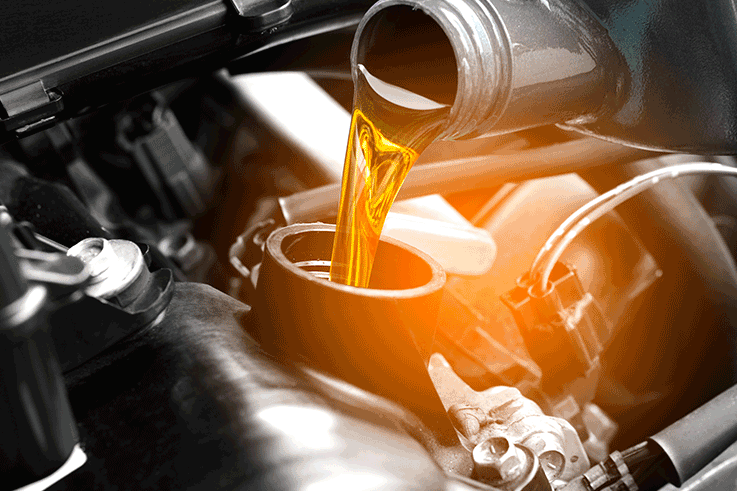
Oil Change Myths Every Kyle Driver Should Know
Oil Change Myths Every Kyle Driver Should Know
There is a lot of outdated advice floating around about oil changes. Some of it comes from an era when engine technology and oil chemistry were completely different. Here are the biggest myths — debunked — so you can make informed decisions about one of the most important maintenance items on your vehicle.
Myth 1: You Need an Oil Change Every 3,000 Miles
This was true decades ago, when conventional mineral oil and older engine designs required more frequent changes. Modern full synthetic oil can last 5,000 to 10,000 miles or more, depending on your vehicle. Many newer cars have oil life monitoring systems that calculate change intervals based on actual driving conditions.
The best answer? Follow your owner’s manual, not the sticker a quick lube puts on your windshield. The sticker is almost always set at 3,000 miles — which may mean you’re changing your oil two to three times more often than necessary.
Myth 2: Dark Oil Always Means It Needs to Be Changed
Engine oil turns dark because it’s doing its job — suspending combustion byproducts and contaminants. Some oils darken quickly without being degraded. The color alone doesn’t tell you much. What matters is the oil’s viscosity and additive package over time, which is why interval-based or monitor-based changes are more reliable than color checks.
Myth 3: Synthetic Oil Causes Leaks in Older Engines
This was a partial concern with early full synthetic formulations in the 1970s and 80s. Modern full synthetic oil is formulated to be safe for gaskets and seals. If an older engine leaks on synthetic oil, those seals were likely already compromised and would have leaked eventually on conventional oil too.
Myth 4: Once You Switch to Synthetic, You Can’t Go Back
False. You can mix synthetic and conventional oil without damaging your engine, and you can switch back and forth. Synthetic oil doesn’t “change” your engine chemistry in any irreversible way.
Myth 5: You Can Judge Oil Life by the Dipstick Test
The dipstick tells you oil level — not oil quality or remaining life. An engine can be right at the full mark and still have degraded oil that needs to be changed. Low oil level is also a warning sign — modern engines shouldn’t consume significant oil between changes. If yours does, that’s worth investigating.
What We Recommend at Chapa Autocraft
When you bring your vehicle to us for an oil change at our Kyle TX shop, we check your owner’s manual and your driving conditions, and give you an honest recommendation. We’re not trying to sell you oil changes you don’t need. We’re trying to keep your engine healthy.
Stop by Chapa Autocraft at 700 Veterans Dr, Kyle, TX 78640 or call 512-504-9577. Serving Kyle, Buda, San Marcos, and surrounding Hays County.
Also see: Our oil change service | Full auto repair | Service area
“Used to change my oil every 3,000 miles because that’s what I grew up on. The guys at Chapa explained the synthetic interval based on my owner’s manual and my driving. Saved me a bunch of unneeded service.”
— Daniel B., Google Review
5 Warning Signs Your Brakes Need Attention
5 Warning Signs Your Brakes Need Attention
Your brakes are the most important safety system on your car. They’re also the easiest to ignore — until they fail. Here are five signs that your brakes are trying to tell you something, and what each one usually means.
1. Squealing When You Brake
That high-pitched squeal is almost always brake pad wear indicators doing their job. Most modern brake pads have a small metal tab that contacts the rotor when the pad material wears down to about 2-3mm. The squeal is your early warning: you have time to get it handled before damage occurs.
If you ignore it, the squeal turns into grinding — which means the metal backing plate is now contacting the rotor. That’s when a $200 brake job becomes a $600 rotor replacement.
2. Grinding or Metal-on-Metal Sound
If you’re past the squeal and into the grind, take care of it immediately. You’re wearing down your rotors with every stop. In some cases, severe grinding can mean a brake pad has broken apart and the metal caliper bracket is dragging on the rotor. This is unsafe to drive on.
3. Car Pulling to One Side When Braking
If your car pulls left or right when you hit the brakes, it usually means one brake is applying more force than the other. Common causes: a stuck caliper, uneven pad wear, or a collapsed brake hose. Any of these should be inspected — pulling under braking can cause you to lose control in an emergency stop.
4. Vibration or Pulsing Through the Brake Pedal
A pulsing pedal when braking usually means warped rotors. Rotors can warp from heat cycles — especially on vehicles that do a lot of towing or mountain driving, or from sudden cold water contact when rotors are hot (like driving through a puddle after hard braking).
Warped rotors can sometimes be resurfaced (turned), but if they’ve already been turned before or are too thin, they need replacement.
5. Soft or Spongy Brake Pedal
If your pedal feels mushy or sinks toward the floor before engaging, there’s likely air in your brake lines or a problem with your master cylinder or brake fluid. This is a serious safety issue — braking distance increases significantly and the system can fail unpredictably.
Don’t drive a car with a spongy brake pedal without getting it inspected first.
Get Your Brakes Checked in Kyle, TX
If any of these signs sound familiar, bring your car to Chapa Autocraft at 700 Veterans Dr, Kyle, TX 78640. We’ll put it on a lift and give you a straight assessment. If you need pads, we’ll show you the old ones. No guessing, no pressure.
Call 512-504-9577 or stop by. We serve Kyle, Buda, San Marcos, and all of Hays County.
Also see: Full auto repair services | Oil change service | Areas we serve
“Came in because of the grinding noise and figured I just needed pads. Chapa showed me a cracked rotor I had no idea about. Fixed both for a fair price and I was back on the road the same day.”
— Chris L., Google Review